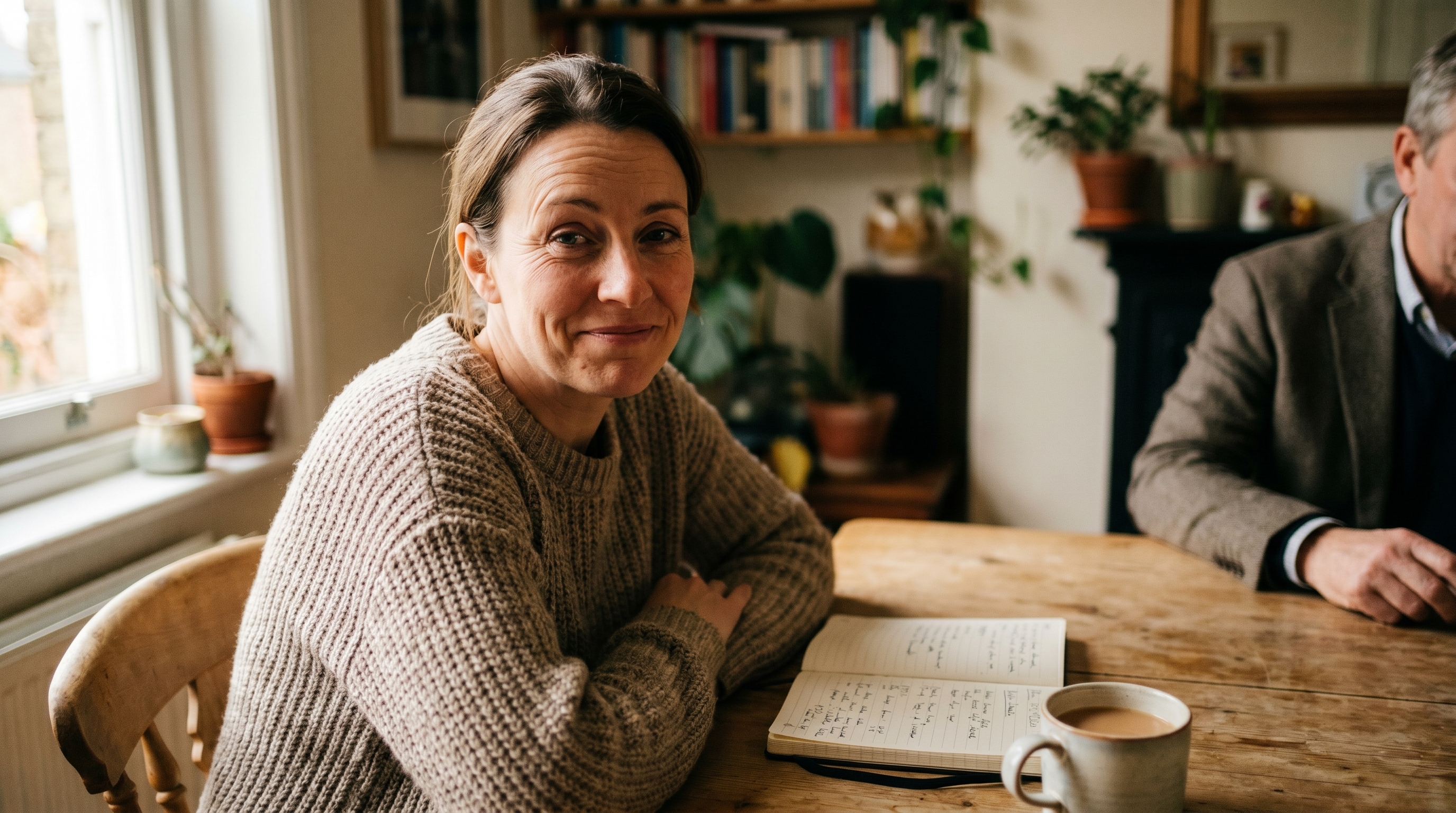
The first tutor we hired didn't last six weeks. The second one was technically excellent and produced no academic improvement at all. The third disappeared after two sessions. The fourth was so disorganised we cancelled mid-term. After three years and 47 separate first-call interviews, I now know within the first ten minutes whether a tutor is going to be worth the money. Here are the seven signs that get them eliminated.
Why this matters more than parents realise
The UK tutoring market has roughly 200,000 active tutors. Approximately 4% of children currently receive private tuition, rising to nearly 30% in London. The market is unregulated. There is no minimum qualification, no required DBS check (a tutor can choose to obtain one but is not legally compelled to), and no formal complaints route. The phrase "qualified teacher" means almost nothing on a tutoring profile, because anyone can write it.
What that means in practice is that the first ten minutes of a parent's initial call with a prospective tutor is doing a lot of work. The tutor is selling themselves. You are filtering them. Most parents are too polite to filter properly, and the cost lands six weeks later when you realise nothing has changed.
You are not buying expertise. You are buying the next three years of your child's relationship with a subject. Filter accordingly.
Red flag 1: They have no questions for you
A good tutor wants to know your child. Within the first ten minutes of a discovery call, a strong candidate will ask: What is your child currently struggling with? Which exam board? Which school? What is the child's relationship with the subject right now — anxious, bored, behind, ahead? What does the parent want the outcome to look like in three months? In six?
If a tutor talks for ten minutes about themselves without asking you anything substantive, they will teach the same way. Generic, broadcasting, not listening. End the call.
Red flag 2: They lead with the CV
A PhD in particle physics tells you very little about whether a tutor can teach a struggling Year 9 girl how to do simultaneous equations. The Cambridge first is irrelevant to GCSE foundation tier. The published research means nothing to an 11-year-old.
Strong tutors mention qualifications once and move on. Weak tutors lead with their CV because it's the strongest thing they have. The tutors who change a child's academic life have, almost without exception, an unspectacular CV and a remarkable ability to break down a confusing concept into three steps the child can hold in their head.
Red flag 3: They're vague about DBS
The right answer to "do you have an Enhanced DBS check?" is a date and a number. Yes, my DBS was issued in March 2026, certificate number 001234567, and it's registered on the Update Service if you want to verify it. That is what a serious tutor sounds like.
The wrong answers are: "I haven't got round to it yet", "I can get one if you want", "My CRB from 2014 should still be valid". Any of these is a no. A tutor without a current Enhanced DBS — or who is unable to obtain one on request — should not be in your home or on a video call with your child. This is non-negotiable.
Red flag 4: They can't explain their first-lesson plan
Ask any prospective tutor: "What does your first lesson with my child look like?" A strong tutor will have a clear, specific answer. The first 20 minutes I diagnose where they actually are versus where the curriculum expects them to be. I pick two topics and ask them to talk me through how they'd approach a question. By the end I know what's missing. Lesson two we start working on the highest-impact gap.
A weak tutor's answer is some variation of "I'll see what they need". That's not a plan. That's an absence of a plan with confident framing. The diagnostic first lesson is the single most important hour of a tutoring relationship, and any tutor who hasn't thought about it carefully is going to waste your money for the next three months.
Red flag 5: Price is the first thing they talk about
Tutoring rates in the UK vary widely — £25-£40 for a competent GCSE specialist, £40-£70 for established A-Level and 11+ tutors, £70-£150+ for premium Oxbridge admissions specialists. Online rates skew lower than in-person by roughly 10-20%.
What matters is not the rate. What matters is what the tutor leads with. If the first ten minutes of conversation is heavily focused on packages, deposits, cancellation policies and rates, you are buying from a business, not a tutor. The best tutors talk about your child first and money last.
The corollary: a tutor who is unwilling to discuss their rates clearly when asked is also a red flag. You're looking for confident transparency. Not a soft-sell pitch.
Red flag 6: They don't ask the exam board
GCSE Maths from AQA, OCR and Edexcel cover the same content but with markedly different paper structures, question styles, and grade boundaries. A tutor who doesn't ask which exam board your child is sitting is either inexperienced or planning to wing it. Either is fatal in the run-up to exams.
Strong tutors ask the exam board within the first three questions. They often have a preference ("I'm strongest on Edexcel — I've marked their papers for four years"), and that preference is itself a useful signal. Specialism beats generalism every time.
Red flag 7: Vague references
At the end of a promising discovery call, ask for two references from current or recent families. The right answer is: yes, here are two parents whose children I've taught in the last six months. I'll email you their numbers tonight.
The wrong answers: "I'd rather not share their details", "all my testimonials are on my website", "I've worked with hundreds of students, I'll need to think who to ask". A confident tutor with happy parents has the references on speed dial.
When you call the references, ask one question: would you hire this tutor again for your next child? The answer tells you almost everything.
The four-question test
If you only have ten minutes, ask these four questions and listen to how the tutor answers:
- What specifically did you teach in your last session with a student at my child's level?
- Which exam board do you know best, and why?
- Can you describe your first-lesson diagnostic process?
- Do you have a current Enhanced DBS and would you share the certificate number?
A strong tutor will answer all four with confident specifics in under five minutes. A weak tutor will hedge, deflect, or generalise on at least two. After three years and 47 calls, I now hire on those four questions alone.
The shortcut
Going through this process for every prospective tutor is exhausting. It's the main reason we built a matched-tutoring service: a family fills out a brief, our team runs the four-question filter on every tutor in the network, and we send back two or three pre-vetted matches within 24 hours. Same DBS check. Same first-lesson process. Same exam-board specialism. Every tutor has had to clear the bar before we ever recommend them. Free, no obligation, and we keep our network deliberately small so that quality stays high.
Explore More Tuition Options
Related Articles
Discover how artificial intelligence is transforming personalized learning and helping students achieve better results across the UK.
Navigate A-Level subject selection with expert guidance to maximize your university applications and career prospects.
Compare online and in-person tutoring methods to find the perfect learning approach for your child's needs and lifestyle.